
Kriyamāṇa Karma
Kriyamāṇa Karma means the actions performed in one’s present life through the exercise of free will.
Kriyamāṇa Karma: Present Action and Free Will
Free Will
These are the actions in which one engages through thoughts, words, and deeds, including everyday routine work, professional activities, occupational duties, responsibilities, and obligations.
Shaping the Future
Present actions may produce immediate results or yield results in the future. For example, bathing brings freshness, while sustained hard work may lead to success in life.
Power of Change
Kriyamāṇa Karma is fully under one’s control and operates on the basis of Kriyā Kāraṇa (cause and effect).
Examples of Present Action
Engaging successfully in business may create wealth, while diligent study may enable a person to become a renowned scholar.
Kriyamana Karma Yoga
Kriyamāṇa Karma Yoga is a form of materialism with a spiritual overtone. It seeks to balance one’s own life with the well-being of human life and society by emphasizing the selfless performance of one’s duties, without attachment to results. Through one’s actions, one serves the lives of others, while results arise as natural consequences.
The orientation of Kriyamāṇa Karma Yoga is towards serving the lives of others alongside one’s own life; the results of action are regarded as natural consequences.
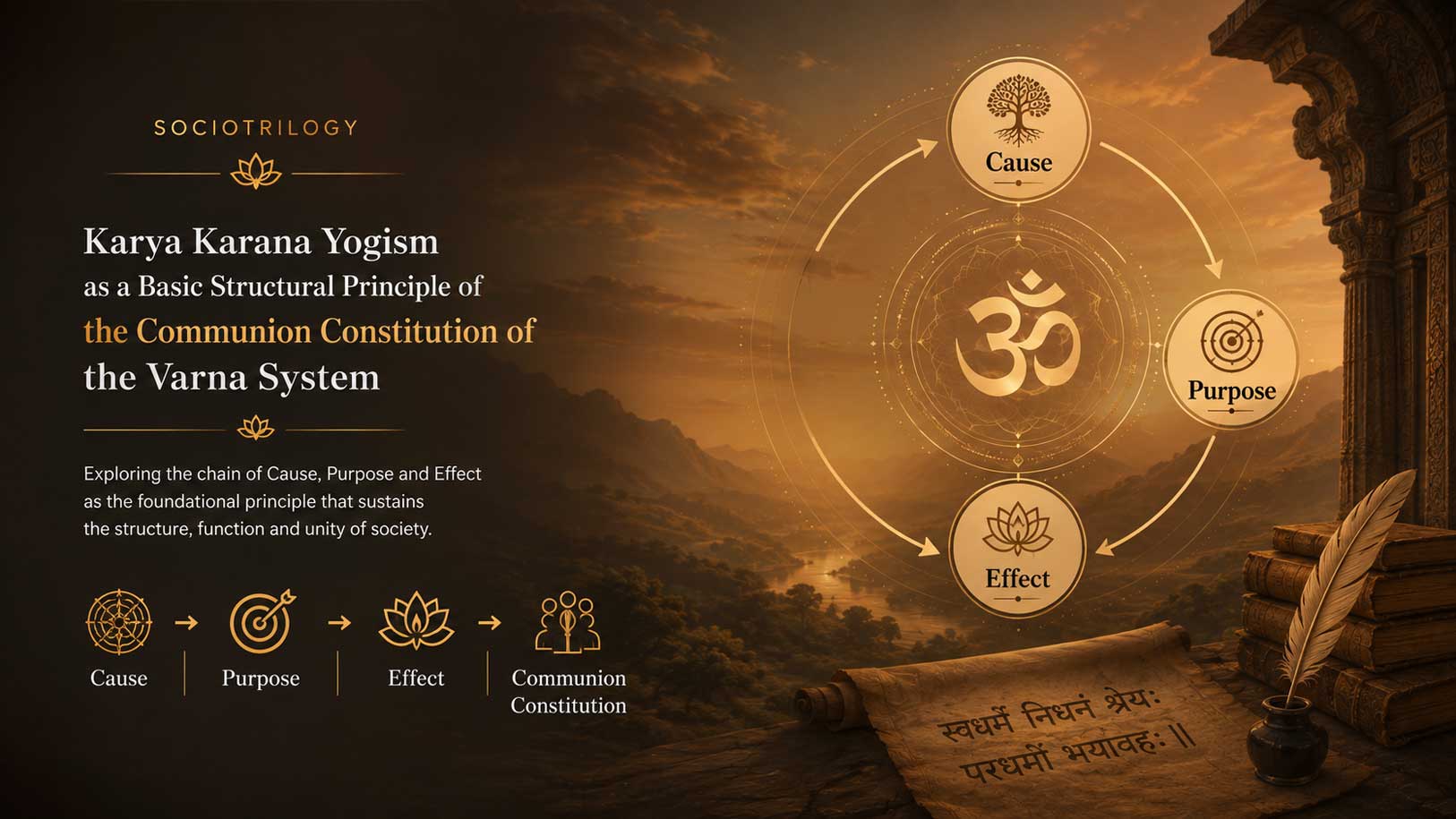
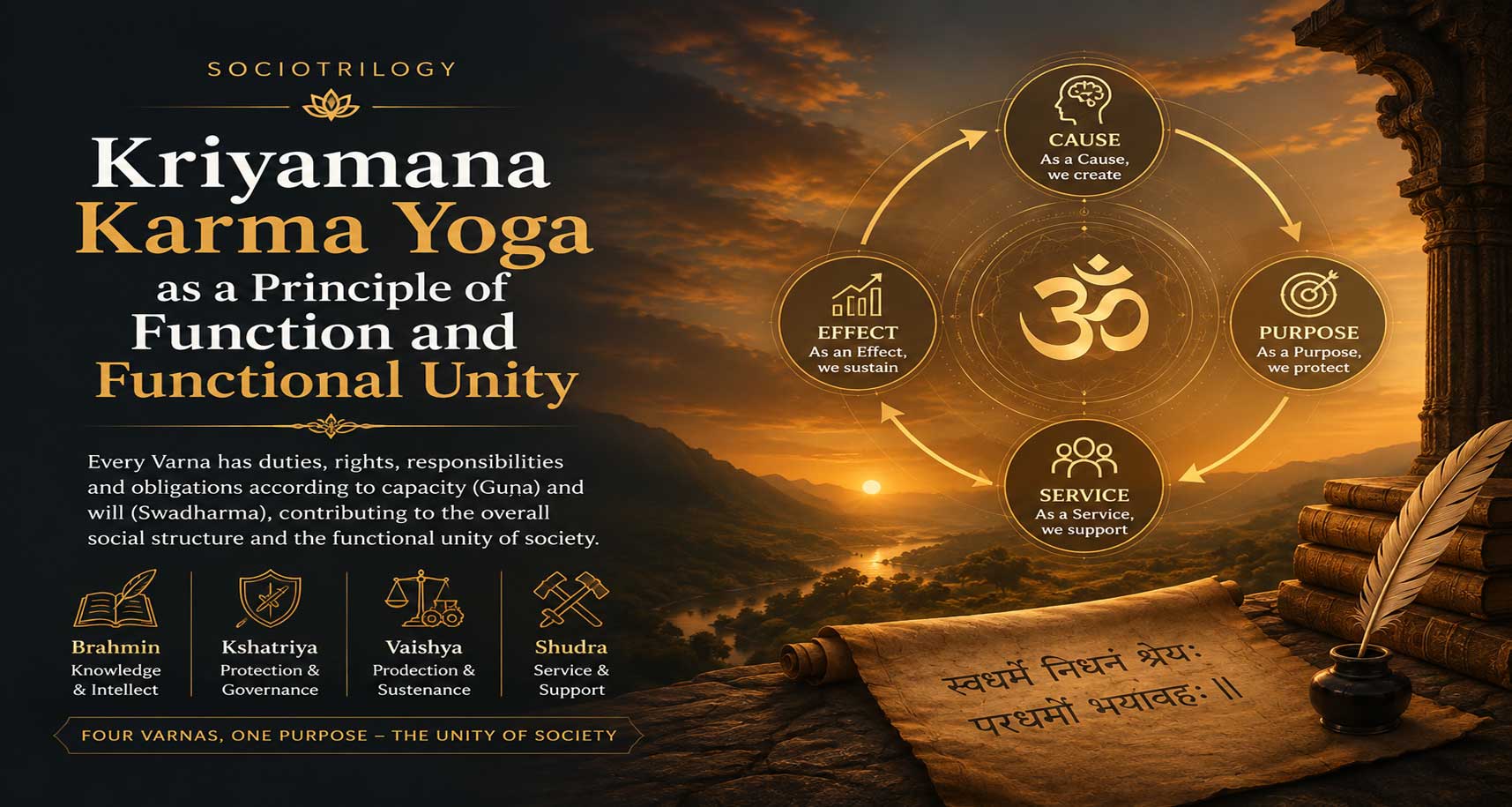
Within Kriyamāṇa Karma Yoga, cause, purpose, and effect are firmly established as a “law of nature.” Any change in one affects the other two interrelated and correlated components of the causal chain of Kriyamāṇa Karma Yoga. In this sense, purpose and effect are interrelated consequences vis-à-vis the cause.
Definition of Kriyamana Karma Yoga
Kriyamāṇa Karma Yoga refers to the performance of duties and responsibilities with complete dedication and commitment, without selfish motive, for the purpose of serving human life and human society, and without attachment to a possessive obsession with results, rewards, wealth, material achievements, name, fame, glamour, or success.
Significant Characteristic Nature of Kriyamana Karma Yoga
1. Purpose-Oriented
The actions of Kriyamāṇa Karma Yoga are purpose-driven and focus on the underlying objective of serving human life. They emphasize a deep and meaningful connection between work, responsibility, and one’s contribution to the growth and development of a living society or state.
2. Dharma as a Governing Principle
Dharma provides a framework of duties, rights, and legal obligations in relation to the action performed.
Every action within Kriyamāṇa Karma Yoga is associated with a status and role. A person occupying that status and performing that role exercises corresponding duties and rights and fulfils the obligation to comply with rules, regulations, codes of conduct, and procedures.
3. Detachment from Possessive Obsession with Material Achievement
The most important characteristic of Kriyamāṇa Karma Yoga is detachment from a possessive obsession with material achievement. Possessive obsession with material achievement is an extremely protective and dominating attitude or form of behavior arising from achievements such as wealth, property, high status, power, skills, talent, and intellect, which a person seeks to exercise over others. It manifests as an extreme urge to control and dominate others. Possessiveness arises from an excessive love of material achievement, while obsessiveness stems from the fear of losing such achievement, as well as from greed, anger, and attachment . Detachment from possessive obsession is therefore the central tenet of Kriyamāṇa Karma Yoga.
Central Tenet: Detachment from possessive obsession with material achievement is the central tenet of Kriyamāṇa Karma Yoga.
4. The Performer Is Just an Instrument of Kriya Karana Yogism
The performer of Kriyamāṇa Karma Yoga is merely an instrument who uses nimitta kāraṇa (the efficient cause), intellectual resources, or natural resources as causes in performing a role that produces an “effect” and achieves the purpose of serving human life.
A writer uses his intellect and talent as a cause to write a book on the economy of the country; the book is an “effect.” The writer thereby serves the “purpose” of enriching people’s lives through knowledge.
A farmer uses land, soil, water, urea, and the mind as causes and cultivates the land to produce food grains as an “effect,” thereby fulfilling the “purpose” of sustaining human life.
Selfless Action and Service to Human Society
Kriyamāṇa Karma Yoga emphasizes the dedicated performance of duties, governed by Dharma, with detachment from possessive obsession with material achievement. Through purposeful action, the individual serves human life and society, while results arise as natural consequences.