
Kriyamana Karma Yoga (Functional Principle of the Varna System)
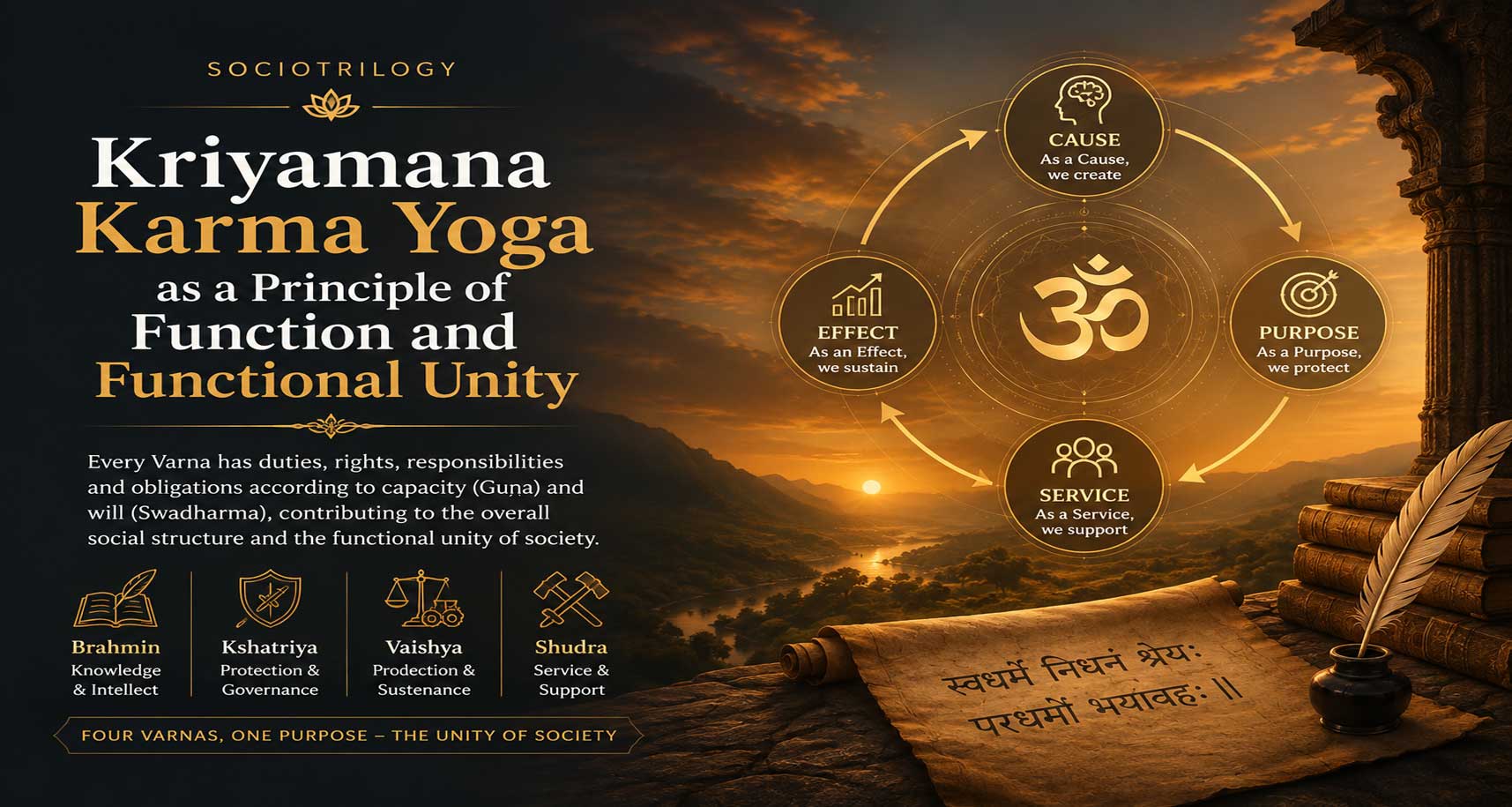
Kriyamāṇa Karma means the actions performed in one's present life through the exercise of free will.
Free Will
These are the actions in which one engages through thoughts, words, and deeds, including everyday routine work, professional activities, occupational duties, responsibilities, and obligations.
Shaping the Future
Present actions may produce immediate results or yield results in the future. For example, bathing brings freshness, while sustained hard work may lead to success in life.
Power of Change
Kriyamāṇa Karma is fully under one's control and operates on the basis of Kriyā Kāraṇa (cause and effect). For example, engaging successfully in business may create wealth, while diligent study may enable a person to become a renowned scholar.
Definition of Kriyamana Karma Yoga
Kriyamāṇa Karma Yoga refers to the performance of duties and responsibilities with complete dedication and commitment, without selfish motive, for the purpose of serving human life and human society, and without attachment to a possessive obsession with results, rewards, wealth, material achievements, name, fame, glamour, or success.
Significant Characteristics of Kriyamana Karma Yoga
Purpose-Oriented
Actions are purpose-driven and focus on serving human life. They emphasize a meaningful relationship between work, responsibility, and contribution to society.
Dharma as a Governing Principle
Dharma provides a framework of duties, rights, legal obligations, rules, regulations, and codes of conduct related to every action.
Detachment from Material Achievement
The central principle of Kriyamāṇa Karma Yoga is freedom from possessive obsession with wealth, status, power, achievements, and material success.
The Performer Is an Instrument
The performer is merely an instrument who uses intellectual and natural resources as causes to produce effects that serve human life.
Examples of Kriyamana Karma Yoga
Writer
A writer uses intellect and talent as a cause to write a book on the economy of the country. The book becomes the effect, while enriching people's lives through knowledge becomes the purpose.
Farmer
A farmer uses land, soil, water, urea, and the mind as causes to cultivate crops. Food grains become the effect, while sustaining human life becomes the purpose.
About Us
We are dedicated to spreading Sanatan knowledge,
sociology, spirituality and universal wisdom
for a better and harmonious world.
Categories
- Samudra Manthan Conflict Theory
- Fundamental Rights under
- Kriyamana Karma Yoga
- Major Conceptual Perspectives
- Karya Karana Yogism

© 2026 Sanatana Sociotrilogy. All Rights Reserved.
Designed by Save As Web